Home / Writing
Writing: Systems
How AI, robotics and software fit together, including the decisions behind NODERIQ and QFlow.
Topics
Formats
Choose a topic and a format to narrow the archive.
Clear filters
How will we verify identity in the quantum age?
Germany’s quantum-resistant identity research raises a wider question: how should AI agents and robots prove who they are, whose authority they carry and when it expires?
Read-
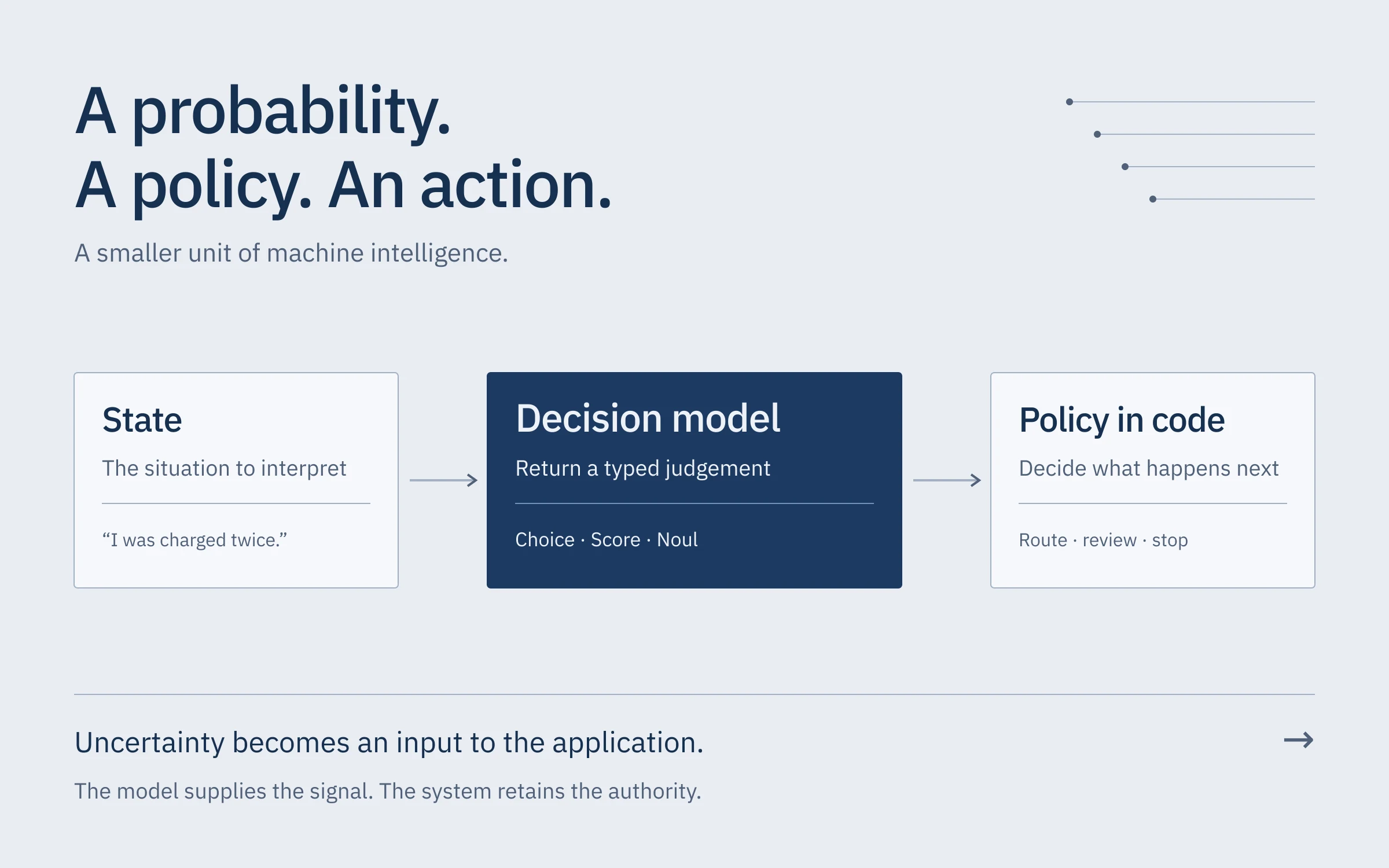
When software needs a decision, not another paragraph
A billing message needs the right destination. TypeSafe’s Jev offers one way to turn an interpretation into a result that software can act on.
-
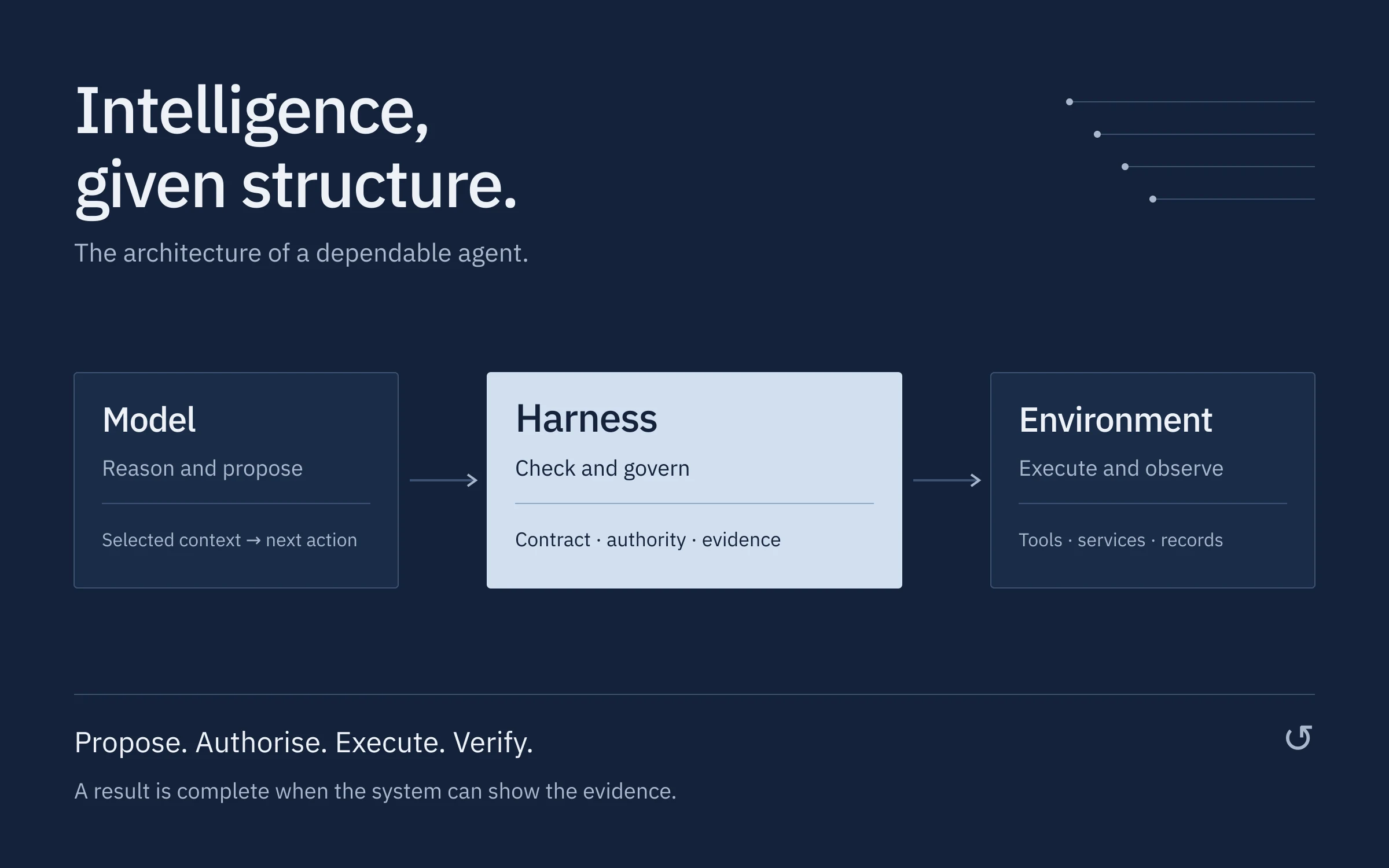
When an AI agent says “done”, what should we check?
A convincing completion message is only the beginning. Harness engineering is the work of helping an agent act, check the result and recover when needed.
-

The connection drops. The robot is still there.
A closed door cuts a robot off from the cloud. Following one inspection explains why small models, local decisions and a shared memory of the job matter.
-

Why I keep the planner classical
A quantum component can help with a calculation without taking over the decision. Keeping that distinction clear makes QANTIS easier to test and use.
Also available as an RSS feed.